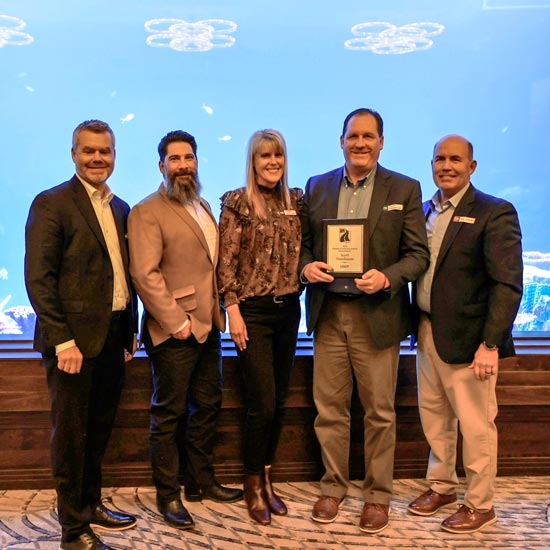

Each year, at the annual dinner, UAPA has the opportunity to celebrate excellence in infrastructure and the dedication required to build lasting, quality pavement projects.
The recognition of these projects goes above and beyond standard specifications, setting a new benchmark for quality, durability, and safety.
UAPA thanks all those who submitted projects for consideration, the judges who had the difficult job of narrowing down the winners, and, of course, the hundreds of dedicated crew members who worked tirelessly to achieve the outstanding results demonstrated in every project nominated, not just those that won this year.
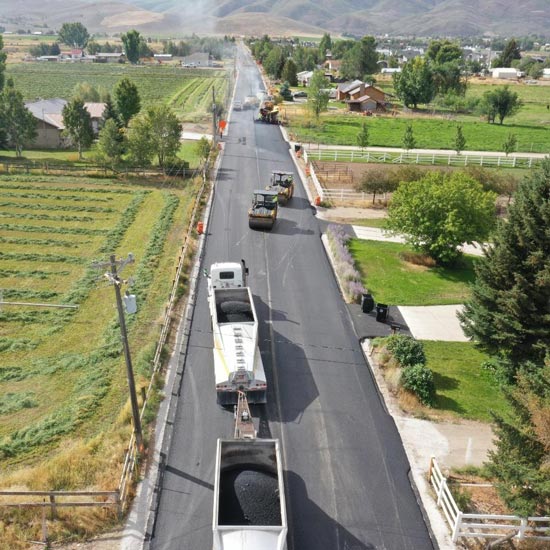
This $2,130,289 project consisted of widening the road and overlaying 2400 East 2400 South with half-inch HMA. The widening added a six-foot shoulder to each side of the road at a depth of three inches. The overlay was at a depth of two inches, and the existing asphalt was prepared with a variable-depth rototiller. One manhole, two drainage structures, signage and striping were added after paving was completed. Asphalt and concrete driveways were also replaced as part of the project.
The 2400 East 2400 South Project stands as a model of collaboration, precision, and innovation in roadway reconstruction. This UDOT-funded project widened and reconstructed a key corridor to meet modern safety and performance standards and improve mobility for Wasatch County.
From project initiation through completion, the team demonstrated exceptional planning and execution. The scope included complete roadway reconstruction, with a new structural base and hot-mix asphalt pavement, to provide a smooth, durable, and long-lasting surface. Improvements also encompassed rotomilling of existing pavement, new asphalt driveways, and extensive subgrade stabilization to ensure long-term structural integrity.
Comprehensive drainage and utility upgrades enhanced the corridors, functionality, and resilience. The work included new drainage pipe systems, manholes, and custom concrete structures designed to improve stormwater management, as well as the relocation of fire hydrants, monument boxes, and installation of fiber roll barriers for erosion control and environmental protection.
Through careful planning and communication, the team successfully maintained safety conditions for workers, motorists, and pedestrians while ensuring that essential community services were maintained.