



Utah’s construction industry continues to grow at a remarkable pace. Population growth, transportation expansion, and ongoing residential and commercial development are driving sustained demand for infrastructure across the state. From roads and utilities to site preparation and vertical development, contractors are facing no shortage of work. What remains in short supply, however, is a steady pipeline of job-ready civil construction workers.
Through a partnership with Clyde Companies, the parent company of WW Clyde, Geneva Rock, Sunroc, and others, Mountainland Technical College (MTECH) responded to this challenge in early 2025 by launching its Civil Construction I program, a hands-on, industry-driven training initiative designed to prepare students for immediate employment in the civil construction sector.
Offered at MTECH’s Lehi campus, the program reflects a collaborative approach to workforce development — one that brings education and industry together to ensure graduates enter the civil construction field with practical skills, safety awareness and a clear understanding of jobsite expectations.
Meeting Workforce Demand with Practical Training
Utah invests billions of dollars each year in infrastructure projects, including transportation systems, utilities and land development. While this investment supports economic growth, it also places ongoing pressure on contractors to recruit, train and retain qualified employees.
The Civil Construction I program was designed as a practical response to that demand. Rather than focusing on narrow or highly specialized tasks, the four-month program provides a broad foundation in civil construction, allowing graduates to contribute across a wide range of jobsite environments.
The program consists of 120 hours of instruction and costs $570 for adult students. High school seniors may attend tuition-free, with minimal material fees. This accessibility helps remove financial barriers while supporting the long-term development of the construction workforce.
Built by Industry, for Industry
A defining feature of the Civil Construction I program is its close alignment with industry needs. The curriculum was developed with input from Clyde Companies, and their supervisors, project managers and field professionals.
Industry partners helped identify the skills that matter most for entry-level workers — skills that support safety, productivity and teamwork on active jobsites. These include understanding construction sequencing, recognizing hazards, reading plans and communicating effectively with crew members and supervisors.
“Anything that gets built has to go through a civil construction process first,” said Lisa Birch, associate vice president of instruction at MTECH. “With the pace of growth in Utah and across the Mountain West, the need for workers who understand that process continues to increase.”
Early estimates suggest that graduates can enter the workforce with a level of familiarity and confidence that would take two to three years to develop through on-the-job experience alone.
Program Highlights
A Well-Rounded Foundation
Civil Construction I provides students with an overview of the construction lifecycle, from early planning through to project completion. The curriculum combines classroom instruction with hands-on learning, helping students connect theory with real-world application.
Areas of instruction include:
- Civil construction processes, from mobilization to project handoff
- Jobsite safety standards and hazard recognition
- Blueprint reading, measurements and basic layout concepts
- Soil types, gradations and aggregate fundamentals
- Construction materials and placement concepts
- Utilities installation and coordination
- Environmental considerations and sustainable practices
This broad foundation prepares graduates to adapt to a variety of roles and jobsite conditions. Contractors benefit from employees who understand how their tasks fit into the larger project and who recognize the importance of coordination, quality and safety.
Hands-on Learning
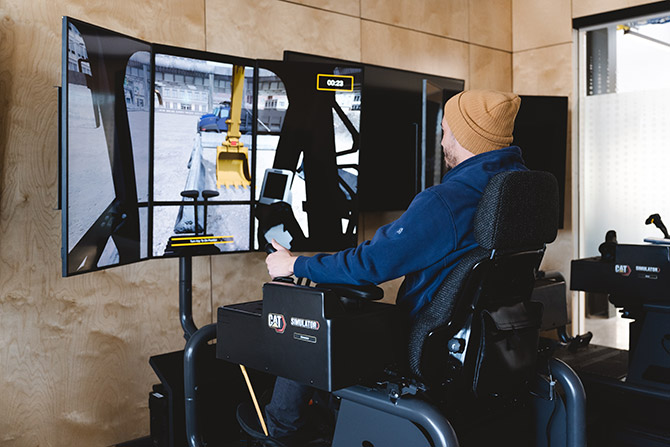
Hands-on training is another core component of the program. Students gain exposure to construction equipment through CAT heavy equipment simulators that replicate the movement, controls and operating conditions of real machinery.
This experience helps students develop situational awareness and an understanding of how equipment, crews and workflows interact on a jobsite. Even if graduates don’t immediately operate equipment once they’re in the field, they will leave the program better prepared to work safely around heavy equipment and communicate effectively with operators and supervisors.
For employers, this means improved jobsite readiness and reduced onboarding time for new hires.
Emphasis on Safety
Safety is woven throughout every aspect of the Civil Construction I program. Students are trained to identify potential hazards, follow established protocols and understand their role in maintaining a safe and productive work environment.
This emphasis reflects industry priorities, particularly on complex jobsites where multiple trades, equipment and activities occur simultaneously. Graduates enter the workforce with a foundational safety mindset, supporting company safety cultures and reducing early-career incidents.
Employers consistently note that safety awareness is one of the most valuable qualities in entry-level employees, making this focus a key strength of the program.
Opportunities for All Ages
The Civil Construction I program is open to individuals 17 and older, with high school students required to be in their senior year. This structure allows young people to explore construction careers while still in school and helps companies connect with future employees early.
High school seniors attend tuition-free, reinforcing MTECH’s mission to provide no-cost technical education before graduation. Adult learners — including veterans and individuals seeking career changes or stable employment — benefit from a short, affordable pathway into the construction industry.
Applicants must either pass a free two-hour entrance assessment or waive the assessment by providing qualifying external test scores or documentation. Applicants can take the entrance assessment at MTECH campuses in Lehi, Payson and Provo.
Connecting Education to Employment
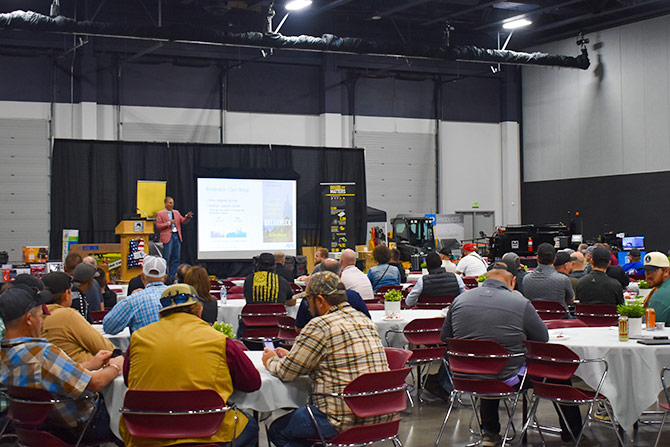
MTECH reinforces classroom learning through direct engagement with employers. Students participate in jobsite tours, hear from industry guest speakers and attend employer open houses. These connections provide students with a clearer picture of career opportunities while giving employers early access to motivated, job-ready candidates.
MTECH also maintains ongoing relationships with industry partners, helping companies meet workforce needs more efficiently. Graduates of the Civil Construction I program are already experiencing strong employment outcomes, reflecting the program’s alignment with industry needs. Many are hired quickly by local construction companies and placed at higher starting levels than traditional entry-level workers.
Some partnering employers, including Clyde Companies, recognize the value of the training received by graduates by placing them in Level 2 labor roles or equivalent classifications. These placements can result in annual earnings that are $1,500 to $2,000 higher than those of entry-level positions.
Advancing the Construction Workforce
The Civil Construction I program aligns with Mountainland Technical College’s mission to enhance employability through market-driven career and technical education. By responding directly to industry input, the program supports stronger jobsite performance, improved retention and long-term career growth.
Looking ahead, MTECH is exploring expanding its offerings with advanced and specialized certifications in other areas of the construction industry, including surveying, heavy equipment operation and materials management. These future offerings would enable workers to continue developing skills within the industry, further strengthening Utah’s pipeline of skilled construction workers.
Building the Future, Together
As Utah’s construction needs continue to expand, partnerships between industry and education will play an increasingly important role. The Civil Construction I program demonstrates how collaborative training efforts can strengthen the workforce and support the success of construction companies across the region.
With multiple cohorts offered throughout the year and strong employer engagement, the program is quickly becoming a cornerstone of workforce development. For individuals seeking hands-on work and for employers seeking skilled, safety-conscious employees, Civil Construction I offers a promising path forward.
The workforce that builds Utah’s communities is growing stronger, one class at a time.
See the Program in Action
The college has produced a short video about the Civil Construction I Program curriculum and its instructional approach, offering a clear view of how students are prepared for job-site expectations.